
Mansfield, TX · Garage Door Service
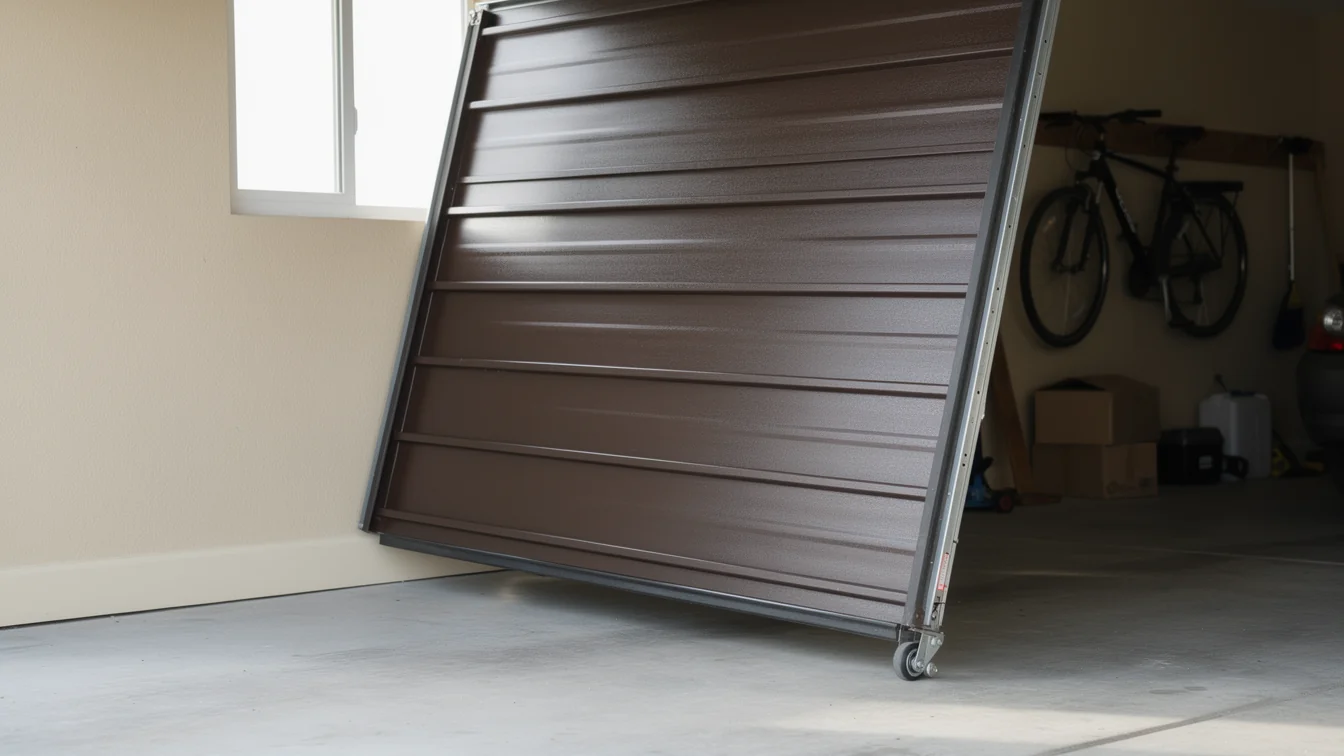
Why Your Garage Door Jumped Its Track
Mansfield homes built mostly in the 1980s-90s have specific track-and-bracket failures. Here's what causes a door to jump track here and what it costs to fix.
- Repairs & new doors
- Springs & openers
- Serving 6 nearby communities
The Cost of This Job
We can't give you a number without looking at the door, and anyone who quotes one over the phone is guessing. A door off track because one roller popped loose from a worn bracket is a short call - tighten the bracket, reseat the roller, check the track for a bend. A door off track because the track itself is bent or the vertical section pulled away from the framing is a bigger job, sometimes a full track replacement on one or both sides. The honest limitation: if your house dates to that 1980s-90s run that makes up most of the building here, the original track hardware is often a thinner gauge than what gets installed today, and matching brackets for an older jamb mount sometimes means a short wait on parts rather than a same-day fix. We'd rather tell you that up front than promise a price and miss it. What we can tell you is that the fix almost always costs less than replacing the whole door, and a door that's merely off track - not bent, not cracked - is nearly always a repair, not a replacement.
What Local Conditions Do
Mansfield sits in a moderate heat band, not an extreme one, but that still means real daily temperature swings across a summer, and those swings move things. Track brackets lag-screwed into wood door jambs expand and contract with the frame around them every season. Over ten years that's background noise. Over thirty, which is exactly the age of a lot of garage structures here given a median build year of 1989, those screws work themselves loose a sixteenth of a turn at a time. A loose bracket lets the track flex sideways under the weight of a moving door, and a roller that used to sit dead center starts walking toward the edge of the rail until one day it walks right off. This isn't a defect in the house. It's what thirty-plus years of ordinary heat cycling does to hardware that was never meant to be permanent. Newer construction with reinforced jamb brackets handles it better, which is one more reason the age of the structure matters more than the brand of the door.
What Is Going On
A door goes off track one of a few ways. Most common: a roller wears down or a bracket backs out enough that the roller rides up the inside lip of the track instead of staying centered, and on the next open or close cycle it jumps clear. Second most common on older hardware: the track itself has a slight bend from years of a loose bracket letting it flex, and the bend has gotten bad enough that rollers can't track through it cleanly anymore. Less common but not rare: something hit the door - a car bumper, a kid's bike - and knocked the track out of alignment in one spot. On double doors with a center post, an off-track roller on one panel can bind against the other panel, which is why a door that's off track often won't move at all rather than just looking crooked. None of these show up overnight most of the time. They build for months as a bracket loosens a little more with every hot week, until the day the door finally gives.
What to Check
Look at the vertical track on both sides of the door from inside the garage. If you see daylight between the bracket and the framing, or the bracket wiggles when you push on it, that's your loose point. Check that the track runs straight up and down - a track that bows outward even slightly at one spot usually means the bracket behind it has already pulled loose once. Watch the rollers while someone opens the door slowly: a roller that drifts toward the outside edge of the rail instead of staying centered is about to come off, if it hasn't already. Don't force a door that's visibly off track by hand or with the opener - running it further can bend the track worse or pull the opener's drive gear. If your house falls in that common 1980s-90s build range found across this area, from in close to out toward Rendon or Kennedale, assume the hardware is original until you've actually looked.
Frequently asked questions
Can I push the door back onto the track myself?
You can sometimes reseat a single roller that's barely off the rail, but if the track is bent or a bracket has pulled loose, forcing the door can bend the track further or strip the opener's gear. If the door won't move freely by hand with the opener disconnected, stop and get it looked at.
Is this covered by anything since my house is older?
That depends on whether the hardware was ever replaced and what, if anything, came with a prior repair - we can't speak to coverage we haven't seen. What we can tell you is that original 1980s-90s track brackets are past any manufacturer warranty by decades.
Why does this seem to happen more in summer?
Heat cycling works lag screws loose in wood jambs over years, and a bracket that's been loosening quietly for seasons often fails on a hot day when the frame has expanded the most. It's cumulative, not sudden, even though the jump off the track feels sudden.
Should I just replace the whole door instead of fixing the track?
Not if the panels, opener, and springs are in good shape - a track and bracket repair on an otherwise sound door is almost always the cheaper and faster fix. Replacement makes more sense when the panels are dented or the door is near the end of its life for other reasons.
Related garage door services in Mansfield
More garage door guides
Book garage door service in Mansfield
Call now or request a quote - tell us what the door is doing and where you are.