
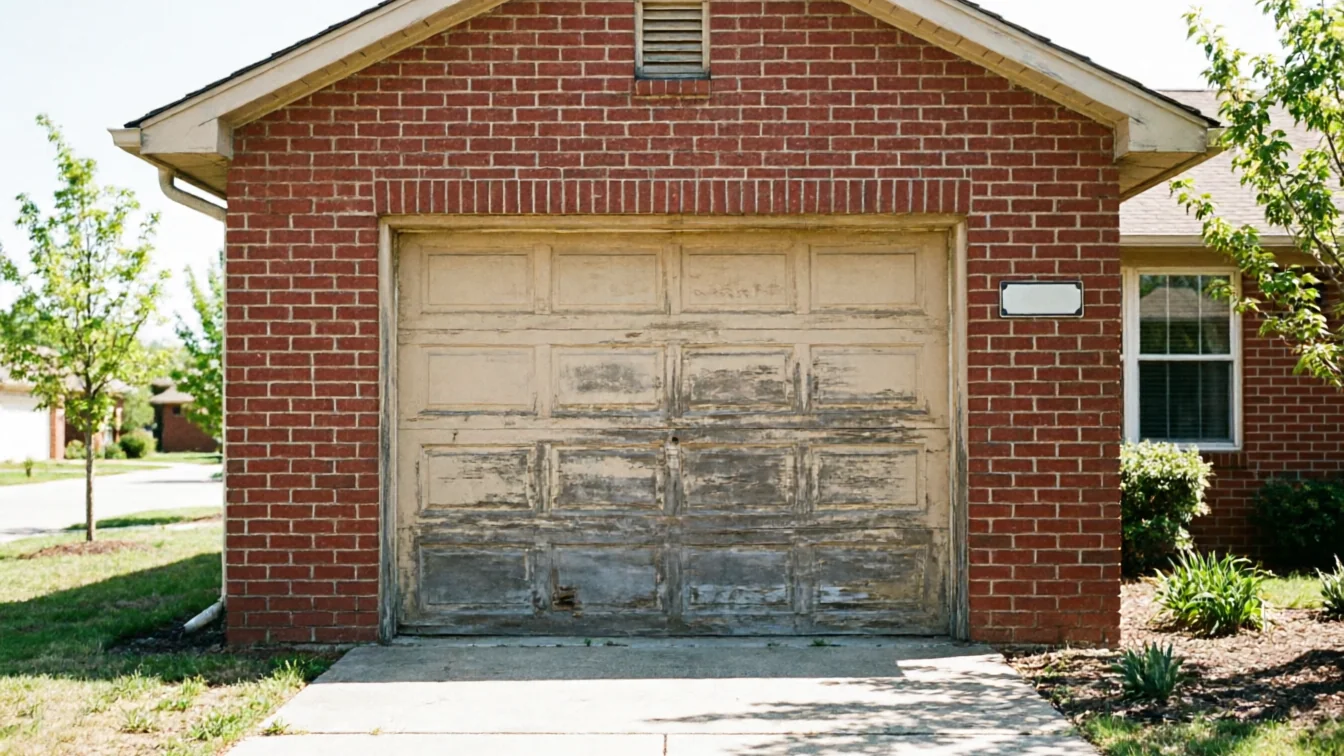
Mansfield, TX · Garage Door Service
Fixing vs. Replacing an Older Door in Mansfield
A look at when repair beats replacement for Mansfield garage doors, based on the city's 1980s-90s housing stock and moderate heat climate band.
- Repairs & new doors
- Springs & openers
- Serving 6 nearby communities
The Cost of This Job
We can't give you a number without seeing the door, the opener, and what's actually broken - a cracked panel on a steel door and a snapped torsion spring are two different jobs with two different price tags. What we can tell you is how the decision usually breaks down here. Mansfield's housing stock runs from 1959 up through 2014, with a median build year of 1989, and most of it clusters in the 1980s and 90s across the area's 18 named neighborhoods. That matters because a door installed when the house went up in, say, 1988 is now old enough that some of its original hardware - rollers, cable, the spring itself - is well past a normal service life, even if the door panel looks fine. If the panel is steel and still square, fixing the moving parts is usually the right call. If the door itself is warped, delaminating, or the track is bent from years of a bad opener fighting it, you're often throwing good money after bad trying to keep it running. We'll tell you straight which situation you're in before we quote anything.
What Local Conditions Do
Mansfield sits in a moderate heat climate band - not the extreme swings you get farther south or west, but steady summer heat cycling all the same. That matters for doors from the 1980s and 90s building wave because the lubricant in old rollers and hinges dries out over repeated hot afternoons, and steel panels expand and contract enough, year over year, to work screws and brackets loose. It's not dramatic damage. It's slow wear, and it shows up as noise first - a grinding roller, a popping hinge - long before anything actually breaks. Houses built in this era also tend to have single-car or two-car attached garages with openers from the same vintage as the door, so when one part finally gives, the whole system is often due at once. That's a different situation than a door installed five years ago on a newer opener. We factor the build era into what we recommend, because a 30-year-old spring carrying a moderate but constant heat load behaves differently than a new one.
What Is Going On
With a median build year of 1989 across Mansfield, a lot of torsion springs and openers in this area are well past the point where most manufacturers rate them. Springs are built for a number of open-close cycles, not a number of years, but after three decades most have been through that cycle count regardless. The usual sequence we see on a house from this era: the spring goes first, often without warning, then a few months or years later the rollers that were already grinding finally seize, and the opener - asked to do more work than it should because the door's balance is off - starts slipping its gears or burning out a circuit board. None of that means the door itself is bad. Steel panels from the 80s and 90s were generally well made, and plenty of them are still straight and solid under all that worn-out hardware. The judgment call is whether the panel and track are still sound enough to be worth putting new springs, rollers, and an opener on, or whether the frame's been racked enough that nothing will sit right again.
What to Check
Before you decide anything, look at a few things yourself. Stand the door half-open and let go - if it drops or shoots up on its own, the spring is off balance and that's a safety issue, not a cosmetic one. Run a hand along the track for rust pitting or bends; a track that's been knocked out of true will chew through new rollers fast no matter what else you fix. Check the bottom panel and seal for water staining or rot, since that's usually the first place an older door fails structurally. And listen to the opener under load - straining, grinding, or a motor that runs longer than it used to all point to a unit working harder than it should. This holds whether you're in central Mansfield or out toward Rendon or Kennedale where some of the same build-era houses sit. If the door's structure is sound, most of what's wrong is replaceable parts. If the frame or track is bent beyond square, that's the point where we'd tell you fixing it isn't the better use of your money.
Frequently asked questions
Is my garage door too old to repair?
Age alone doesn't decide it. A steel door from the 1980s or 90s building wave can still be perfectly sound under worn hardware. What matters is whether the panel is straight, the track isn't bent, and the frame hasn't racked. If those are fine, new springs, rollers, or an opener usually make more sense than replacing the whole door.
Why does my old opener keep straining even after a repair?
If the spring was out of balance for a while before you noticed, the opener was carrying weight it was never built for. That wears gears and motors faster than normal use would. Sometimes fixing the spring alone solves it; sometimes the opener's already been worked hard enough that it needs attention too.
Does Mansfield's climate affect how long a garage door lasts?
Mansfield's heat band is moderate, not extreme, but the steady cycle of hot summer days still dries out lubricant in rollers and hinges and works screws loose over years. It's a slower process than in harsher climates, but it adds up, especially on doors original to houses built in the 1980s and 90s.
Related garage door services in Mansfield
More garage door guides
Book garage door service in Mansfield
Call now or request a quote - tell us what the door is doing and where you are.